

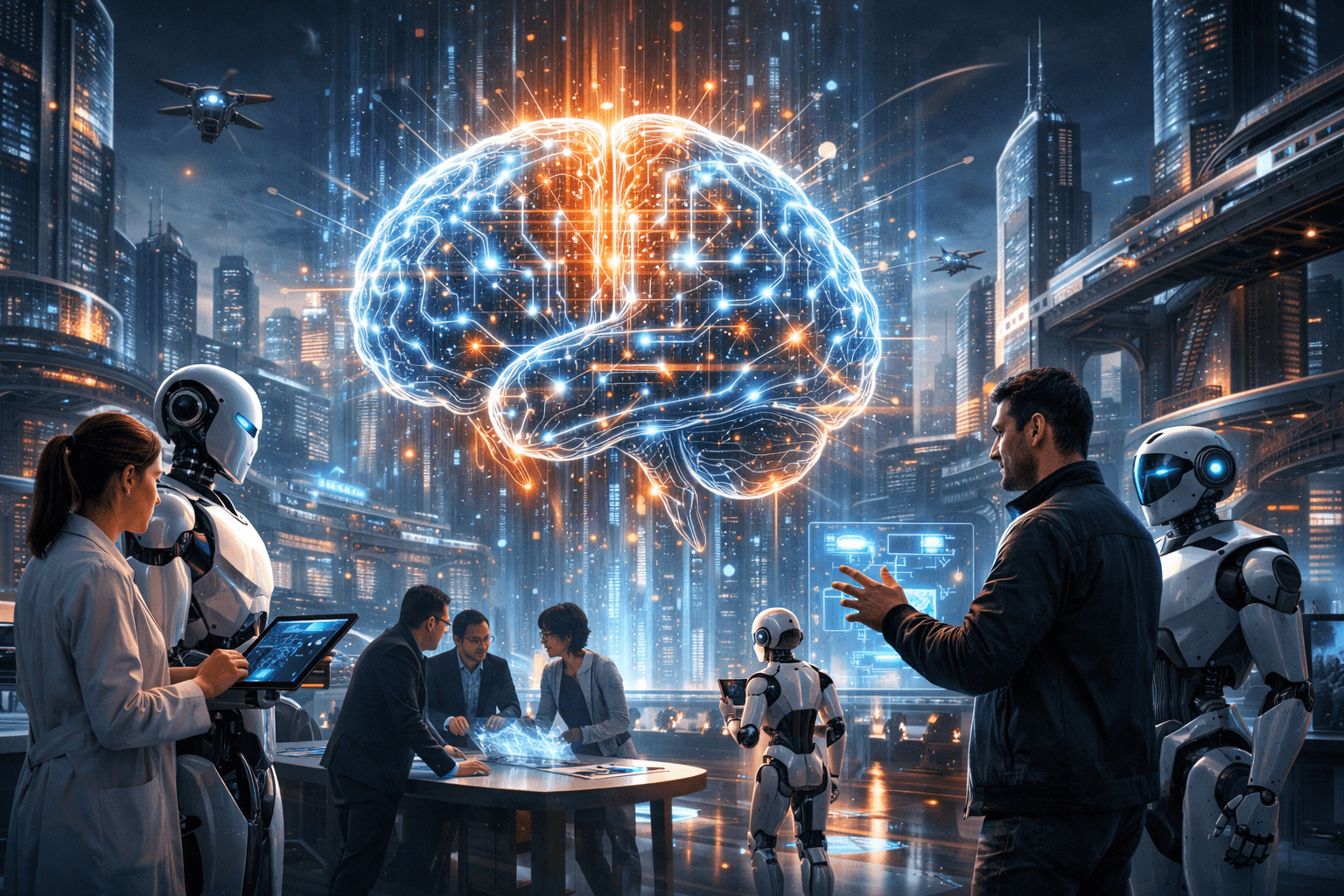
Top AI Trends That Will Shape the World in 2026
Introduction: Why Artificial Intelligence Is Dominating the Future
Artificial Intelligence (AI) is no longer a futuristic concept—it is already shaping how businesses operate, how people work, and how technology evolves across the globe. From startups to multinational corporations, AI is becoming a core driver of efficiency, innovation, and competitive advantage. In 2026, AI is expected to move beyond experimentation and become deeply embedded in everyday life.
Governments are investing heavily in AI research, companies are automating complex workflows, and consumers are interacting with AI-powered systems daily—often without realizing it. Whether it’s personalized recommendations, virtual assistants, fraud detection, or autonomous decision-making systems, AI is influencing nearly every industry.
In this article,
we explore the top AI trends that will shape the world in 2026,
how these trends impact businesses and individuals, and what the future holds for artificial intelligence.
1. Generative AI Beyond Content Creation
Generative AI gained massive popularity due to its ability to create text, images, videos, and even code. However, in 2026, generative AI is evolving far beyond content creation.
Key Developments:
- AI-generated software development and debugging
- Automated product design and prototyping
- AI-generated music, films, and immersive experiences
- Advanced simulations for scientific research
Businesses are now using generative AI to speed up product development cycles, reduce costs, and personalize customer experiences at scale. Rather than replacing creativity, generative AI is becoming a co-creator, helping professionals work faster and smarter.
2. Autonomous AI Agents and Decision-Making Systems
One of the biggest AI trends in 2026 is the rise of autonomous AI agents. These systems don’t just assist humans—they make decisions independently based on data, goals, and real-time inputs.
Where Autonomous AI Is Used:
- Supply chain optimization
- Financial trading and risk management
- Customer support automation
- Smart infrastructure and logistics
Autonomous AI agents can analyze massive datasets, predict outcomes, and take action without constant human intervention. While this increases efficiency, it also raises concerns around accountability, transparency, and ethical use.
Businesses adopting autonomous AI must ensure proper governance frameworks to avoid unintended consequences.
3. AI in Business Automation and Operations
AI-powered automation is becoming the backbone of modern business operations. In 2026, companies that fail to adopt AI-driven processes risk falling behind competitors.
Major Areas of Impact:
- Intelligent customer support (AI chatbots & voice assistants)
- Automated marketing campaigns
- Predictive sales forecasting
- Smart HR recruitment systems
AI allows businesses to operate 24/7, reduce human error, and focus on strategic growth. Small and medium-sized enterprises (SMEs) are also gaining access to enterprise-level automation tools, leveling the playing field globally.
Business Benefits:
- Lower operational costs
- Faster decision-making
- Improved customer satisfaction
- Scalable growth
4. AI in Healthcare: Precision, Speed, and Personalization
Healthcare is one of the most transformative sectors for AI in 2026. AI-powered systems are improving diagnosis accuracy, reducing treatment costs, and saving lives.
Healthcare AI Applications:
- Early disease detection using medical imaging
- Personalized treatment plans
- AI-assisted robotic surgeries
- Drug discovery and clinical research
AI can analyze patient data faster than traditional systems, identifying patterns that humans may overlook. This leads to early intervention and better patient outcomes, especially in critical care and chronic disease management.
However, data privacy and ethical concerns remain major challenges that healthcare providers must address carefully.
5. AI in Finance, Banking, and Investment
The financial sector continues to be revolutionized by artificial intelligence. In 2026, AI-driven finance systems are more accurate, secure, and personalized than ever before.
Key AI Uses in Finance:
- Fraud detection and prevention
- Algorithmic trading
- Credit risk analysis
- Personalized financial advice
AI is helping banks and fintech companies deliver smarter services while reducing fraud and operational risks. For investors, AI-powered tools offer better insights into market trends and portfolio optimization.
6. AI and the Future of Work
The future of work is one of the most discussed topics related to AI. While automation replaces certain repetitive jobs, it also creates new roles that require advanced skills.
Jobs Most Affected by AI:
- Data entry and clerical roles
- Basic customer service
- Routine manufacturing tasks
Jobs Created by AI:
- AI engineers and data scientists
- Prompt engineers
- AI ethics and compliance experts
- Automation strategists
Rather than eliminating jobs entirely, AI is reshaping job roles. Workers who adapt by learning AI-related skills will remain competitive in the global job market.
7. Ethical AI, Privacy, and Global Regulations
As AI becomes more powerful, ethical concerns are taking center stage. Governments and organizations worldwide are introducing regulations to ensure responsible AI development.
Major Ethical Concerns:
- Bias in AI algorithms
- Data privacy and surveillance
- Transparency in AI decisions
- Accountability for AI-driven actions
In 2026, ethical AI is no longer optional—it is a legal and reputational requirement. Companies must prioritize transparency, fairness, and compliance to maintain public trust.
8. Multimodal AI and Human-AI Interaction
Multimodal AI systems can process text, images, audio, and video simultaneously. This leads to more natural and intuitive interactions between humans and machines.
Examples of Multimodal AI:
- Voice-controlled virtual assistants with visual understanding
- AI-powered video analysis
- Smart education platforms
- Advanced customer service bots
Multimodal AI enhances accessibility, improves user experience, and enables new forms of digital communication.
9. AI in Travel, Smart Cities, and Daily Life
AI is increasingly shaping everyday experiences, from travel planning to urban infrastructure.
AI in Daily Life:
- Smart traffic management systems
- AI-powered travel recommendations
- Predictive weather and disaster alerts
- Personalized entertainment platforms
Smart cities use AI to reduce energy consumption, improve public safety, and optimize transportation networks. These advancements improve quality of life while supporting sustainable development.
10. The Future of Artificial Intelligence: What to Expect Beyond 2026
Looking ahead, AI will continue evolving rapidly. We can expect:
- More human-like AI reasoning
- Wider adoption of AI in education
- Stronger global AI governance
- Deeper AI-human collaboration
The most successful individuals and businesses will be those who embrace AI as a tool for growth rather than a threat.
Conclusion: Preparing for an AI-Driven World
Artificial intelligence is redefining how the world works. In 2026, AI is not just a technological trend—it is a fundamental force shaping economies, industries, and societies.
By understanding these AI trends and adapting early, businesses and individuals can stay ahead in an increasingly competitive global landscape. Whether you are an entrepreneur, investor, professional, or tech enthusiast, embracing AI responsibly will be key to future success.