

Introduction: Technology Is Changing the Way We Travel
Travel has always been about discovering new destinations, experiencing different cultures, and creating unforgettable memories. However, the way people plan, experience, and enjoy their journeys is changing rapidly. Technology is becoming an essential part of modern tourism, making travel more convenient, personalized, secure, and interactive.
From exploring a hotel room through virtual reality before booking to navigating unfamiliar cities using augmented reality, modern travelers are experiencing destinations in ways that were once difficult to imagine. Airports are also becoming smarter through facial recognition, fingerprint scanning, digital identity verification, and automated boarding systems.
In 2026, tech in travel is no longer just about booking flights online or using mobile applications. It is about creating connected travel experiences where digital technology supports travelers throughout their journeys.
Three technologies are particularly influential in this transformation:
- Augmented Reality (AR): Bringing digital information into the real world.
- Virtual Reality (VR): Allowing travelers to experience destinations digitally before visiting.
- Biometric Technology: Making identity verification and airport procedures faster and more convenient.
These innovations are changing how travelers explore destinations, interact with tourism businesses, and move through international airports.
In this guide, we explore how these technologies work, their benefits, their challenges, and what they mean for the future of global tourism.
1. Augmented Reality (AR): Bringing Destinations to Life


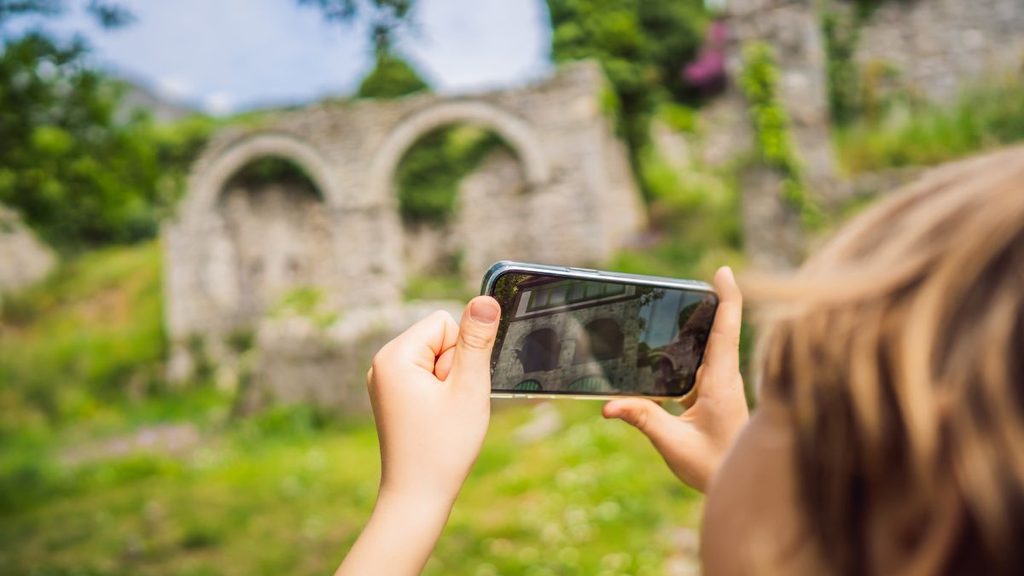
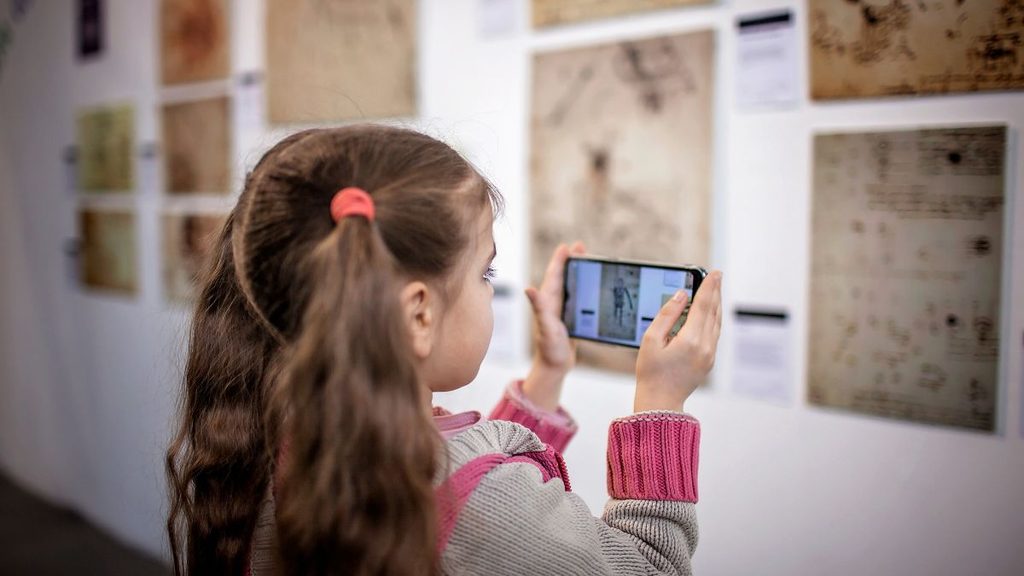
Augmented Reality is one of the most exciting innovations in the tourism industry. It combines digital information, images, animations, and interactive elements with the real-world environment.
Unlike traditional travel guides, AR allows visitors to see additional information directly through their smartphones, tablets, or AR glasses.
Imagine standing in front of an ancient temple and pointing your smartphone camera toward it. Instead of simply looking at the building, you can see historical information, reconstructed architectural features, translations, and interactive explanations displayed on your screen.
How AR is transforming tourism
- Interactive sightseeing: Travelers can discover historical information about monuments, buildings, and attractions.
- Smart navigation: AR applications can display directions over real-world streets and landmarks.
- Language translation: Visitors can use camera-based translation to understand signs, menus, and other written information.
- Museum experiences: Digital animations can explain historical objects and bring exhibitions to life.
- Hotel exploration: Guests can use AR to understand hotel facilities, locate amenities, and explore available services.
Real-world example: Hong Kong’s City in Time
Hong Kong’s Tourism Commission introduced the City in Time project, which uses AR to recreate historical scenes at selected locations.
Visitors can use smartphones to compare historical panoramic images with the modern surroundings. The experience combines animations, descriptions, and historical visuals to help people understand how different parts of the city have changed over time. Tourism Commission
This demonstrates how augmented reality can turn ordinary sightseeing into an interactive cultural experience.
Why it matters: AR helps destinations offer more engaging experiences while allowing travelers to explore independently without depending entirely on traditional tour guides.
2. Virtual Reality (VR): Experience Destinations Before Visiting

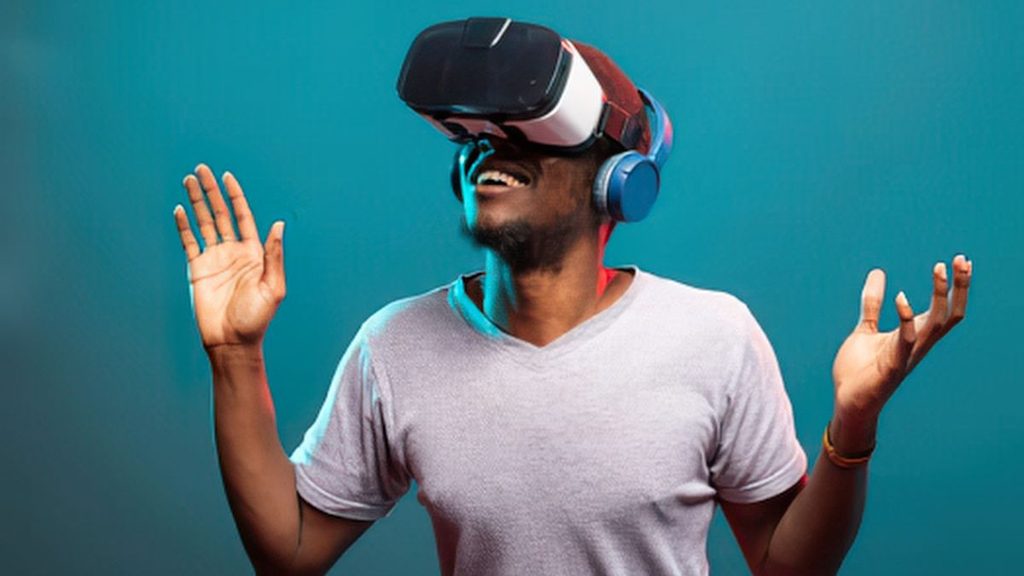
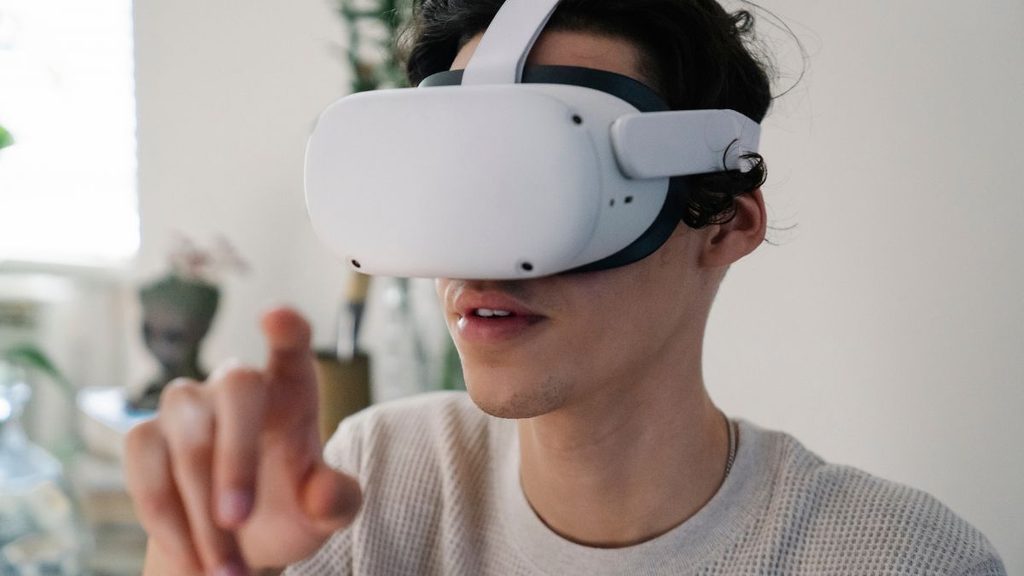
Virtual Reality takes digital tourism experiences a step further by creating computer-generated environments that users can explore through VR headsets or compatible devices.
Rather than simply viewing pictures or videos, travelers can experience immersive digital environments that simulate real destinations.
Imagine planning a vacation to the Maldives. Before purchasing your flight tickets, you put on a VR headset and virtually explore a beach resort, walk through its rooms, view the swimming pool, and experience the surrounding environment.
This technology helps travelers make more informed decisions before spending money on their holidays.
Major applications of VR in travel
1. Virtual hotel tours
Hotels can create immersive virtual tours that allow potential guests to explore rooms, restaurants, swimming pools, conference facilities, and other amenities before booking.
2. Destination previews
Tourism boards can create virtual experiences showcasing mountains, beaches, heritage sites, and adventure destinations.
3. Virtual travel experiences
People who cannot travel because of physical limitations, financial restrictions, or other circumstances can explore destinations virtually.
4. Travel education and training
Travel companies can use VR to train employees, demonstrate safety procedures, and prepare tour guides for different environments.
5. Tourism marketing
Travel agencies can use VR experiences at exhibitions and promotional events to attract potential customers.
Is VR replacing traditional tourism?
No. Virtual tourism is more likely to complement physical travel than replace it.
A virtual experience can help someone understand what a destination looks like, but it cannot completely recreate the taste of local food, the atmosphere of a cultural festival, or the emotions of experiencing a new place in person.
Research published in 2026 examining VR, AR, and the metaverse in tourism highlights the growing academic and industry interest in immersive travel experiences. DOI
3. Biometric Technology: Making Airports Smarter and Faster
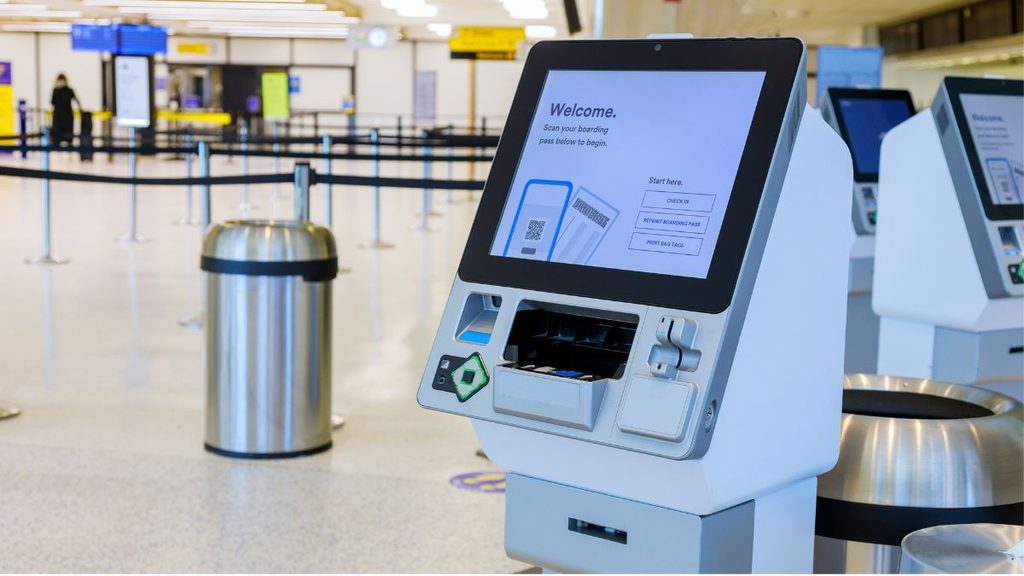
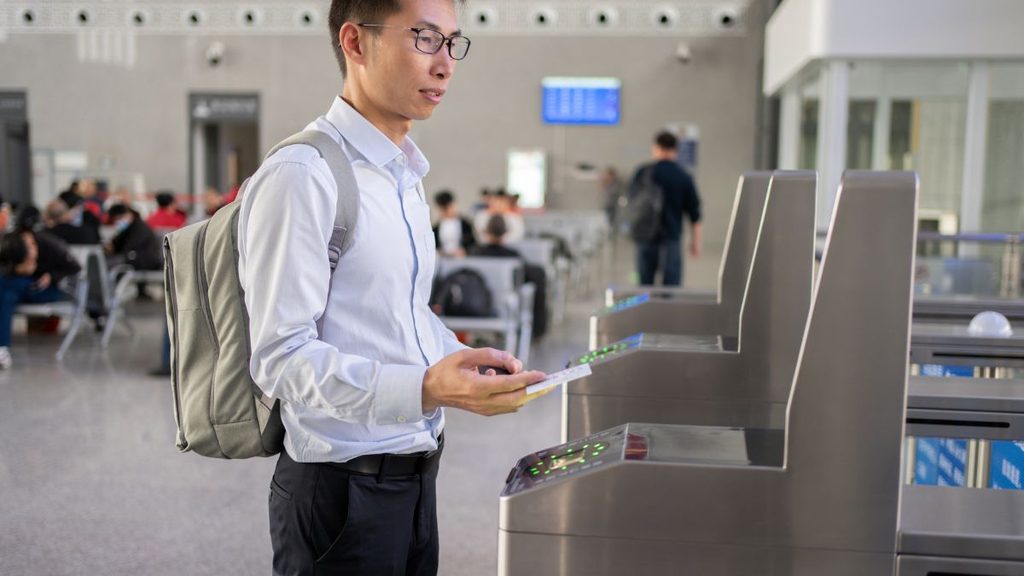
Airport procedures have traditionally involved multiple identity checks. Passengers show passports, boarding passes, identification documents, and travel authorizations at different stages of their journey.
Biometric technology is helping modern airports simplify these processes.
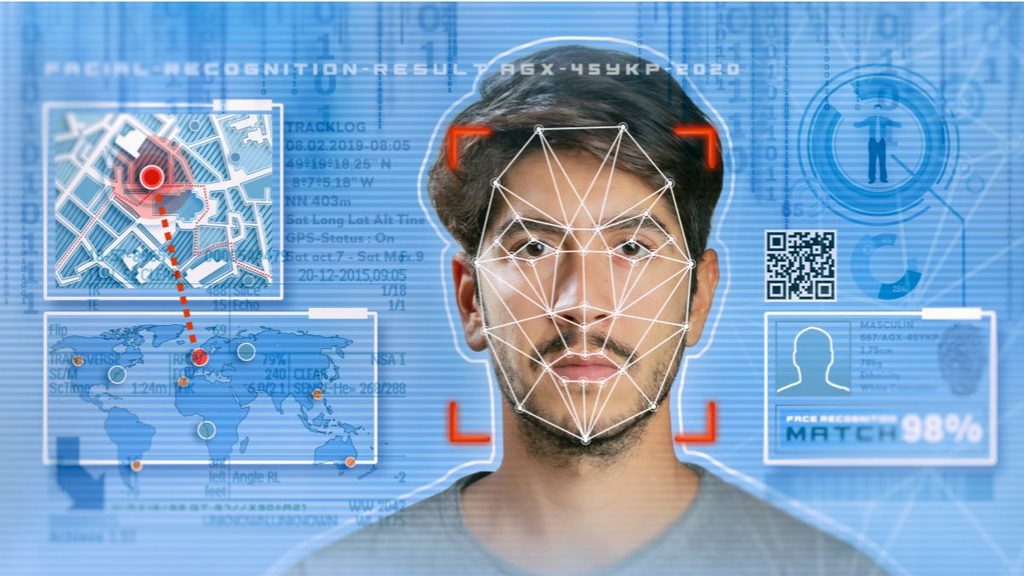
Biometrics refers to the use of unique physical or behavioral characteristics to verify a person’s identity.
Common biometric technologies include:
- Facial recognition
- Fingerprint scanning
- Iris recognition
- Voice recognition
In the travel industry, facial recognition is particularly important because it can help airports and airlines verify passengers at check-in, baggage drop, security checkpoints, immigration, and boarding gates.
How biometric airport systems work
A typical biometric-enabled journey may involve the following steps:
- Registration: A traveler provides the required identity information and, where applicable, a biometric image.
- Identity verification: The system compares the live biometric information with an authorized reference.
- Check-in: The passenger’s identity can be verified through an integrated digital system.
- Security and immigration: Participating checkpoints may use biometric identification to reduce repeated document checks.
- Boarding: Facial recognition can help confirm the passenger’s identity at supported boarding gates.
The exact process varies depending on the airport, airline, country, and applicable regulations.
The IATA One ID initiative
The International Air Transport Association (IATA) is promoting its One ID initiative to support a more seamless and contactless passenger journey.
The concept allows passengers to use digital travel credentials and biometric verification to reduce the need to repeatedly present physical travel documents.
In April 2026, IATA reported successful proof-of-concept projects involving airlines, airports, technology providers, and governments across Europe and Asia-Pacific. These projects demonstrated that digital identity and biometric verification can support contactless international travel across different systems. IATA
What do travelers think about biometrics?
2026 industry insight
According to IATA’s October 2026 Global Passenger Survey:
58%
Used biometrics
Experienced biometric identification during an airport journey in the past 12 months.
87%
Satisfied users
Biometric users who reported being happy with the experience.
78%
Willing to share
Would share biometric information to avoid repeatedly showing passports or boarding passes.
84%
Digital passport interest
Interested in using digital passports for online check-in.IATA
These figures demonstrate growing interest in faster, technology-supported airport experiences.
However, biometric adoption also depends on passenger consent, data protection, system reliability, and government regulations.
4. Artificial Intelligence: Creating Smarter Travel Experiences

Artificial Intelligence is becoming an important part of the modern travel ecosystem.
Travelers can use AI-powered applications to research destinations, compare accommodation options, discover activities, organize itineraries, and receive personalized recommendations.
For example, someone planning a seven-day European vacation can use an AI travel assistant to create a suggested itinerary based on their budget, preferred destinations, travel dates, and interests.
How AI improves travel
- Personalized destination recommendations.
- Automated itinerary planning.
- Real-time travel updates.
- AI-powered customer support.
- Dynamic pricing and demand forecasting.
- Language assistance and translation.
- Personalized hotel and activity suggestions.
According to IATA’s 2026 survey, 49% of passengers had already used AI for travel planning. This shows that AI is becoming a mainstream part of travel decision-making. IATA
5. Smart Hotels and Connected Accommodation



Technology is changing the hotel experience as much as it is changing airports and transportation.
Smart hotels use connected devices, sensors, mobile applications, and automated systems to improve guest convenience.
Guests may be able to control lighting, room temperature, entertainment systems, and curtains through a smartphone or voice assistant.
Popular smart hotel features
- Mobile check-in and digital room keys.
- Smart lighting and temperature control.
- Voice-controlled room services.
- Automated housekeeping requests.
- Personalized guest recommendations.
- Digital concierge services.
- Contactless payment systems.
For hotels, these technologies can improve operational efficiency and help staff understand guest requirements more effectively.
For travelers, they create a more convenient and personalized accommodation experience.
6. Contactless Payments and Digital Travel Wallets

Carrying cash, exchanging currencies, and managing multiple payment cards can sometimes make international travel complicated.
Digital wallets and contactless payment technologies are making financial transactions easier for modern travelers.
With compatible devices and supported payment providers, travelers can pay for hotel stays, transportation, shopping, and restaurant meals using smartphones or smartwatches.
Digital travel wallets may also bring together:
- Boarding passes.
- Hotel reservations.
- Digital identity credentials.
- Travel insurance documents.
- Loyalty memberships.
- Payment cards.
The development of digital identity systems could make these wallets even more useful by connecting travel documentation with other journey services.
However, travelers should always maintain access to alternative payment methods in case of device failure, network problems, or payment restrictions.
7. Internet of Things (IoT): Connecting the Entire Travel Journey
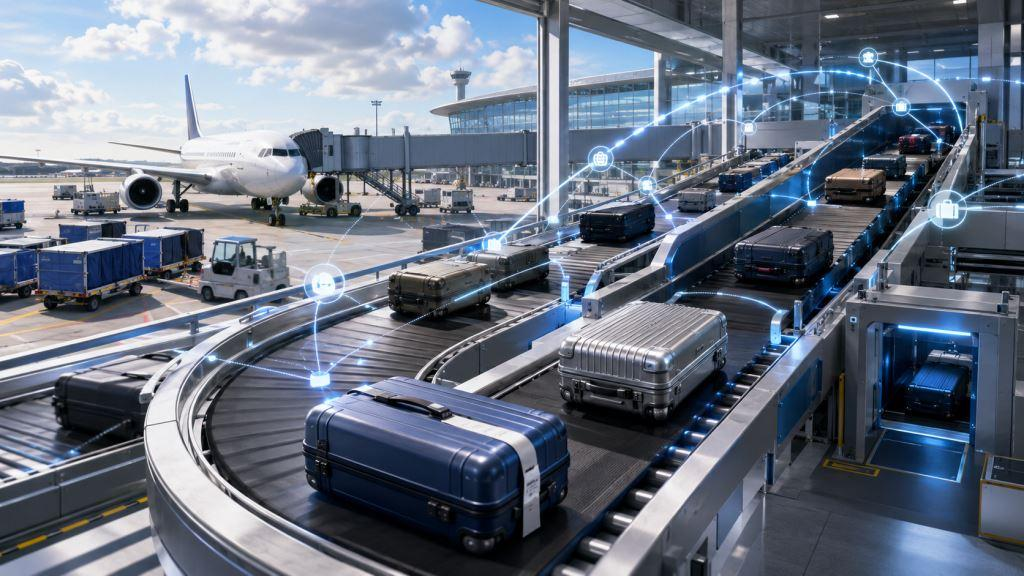
The Internet of Things refers to physical devices connected through digital networks that can collect, exchange, and process information.
In travel, IoT technology can connect luggage, airport infrastructure, hotel systems, vehicles, and other services.
For example, smart luggage-tracking systems can help passengers monitor their bags through compatible applications.
Airports can also use connected sensors to monitor passenger movement, equipment performance, environmental conditions, and operational activities.
Examples of IoT in tourism
- Real-time luggage tracking.
- Smart parking systems.
- Connected hotel room devices.
- Airport crowd monitoring.
- Vehicle tracking for tour operators.
- Smart energy management in hotels.
IoT can help tourism businesses make better operational decisions while providing travelers with more reliable information.
8. Robotics and Automation in Travel Services
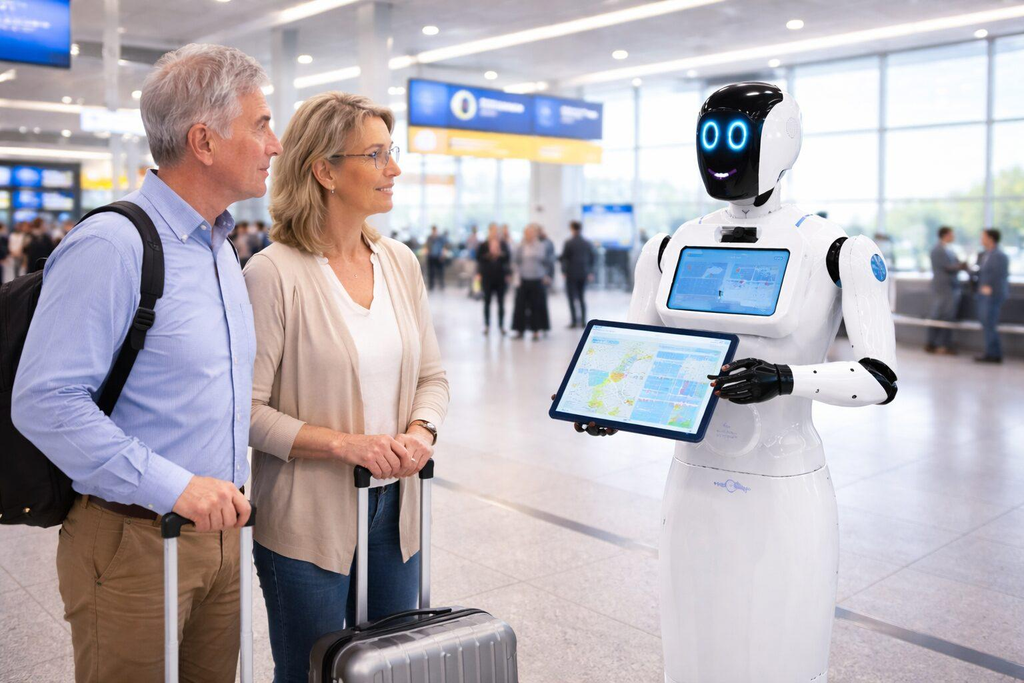
Robotics is becoming another interesting part of the travel technology revolution.
Airports, hotels, and tourism companies are exploring robots to automate repetitive tasks and improve customer service.
Examples include:
- Robots delivering room amenities in hotels.
- Automated airport cleaning systems.
- Robotic customer service assistants.
- Automated baggage handling.
- Robots providing basic directions and information.
Although robots cannot replace the human hospitality experience, they can support employees by handling routine activities.
This allows staff to focus more on customer relationships and complex service requirements.
9. Smart Navigation and Location-Based Travel Applications
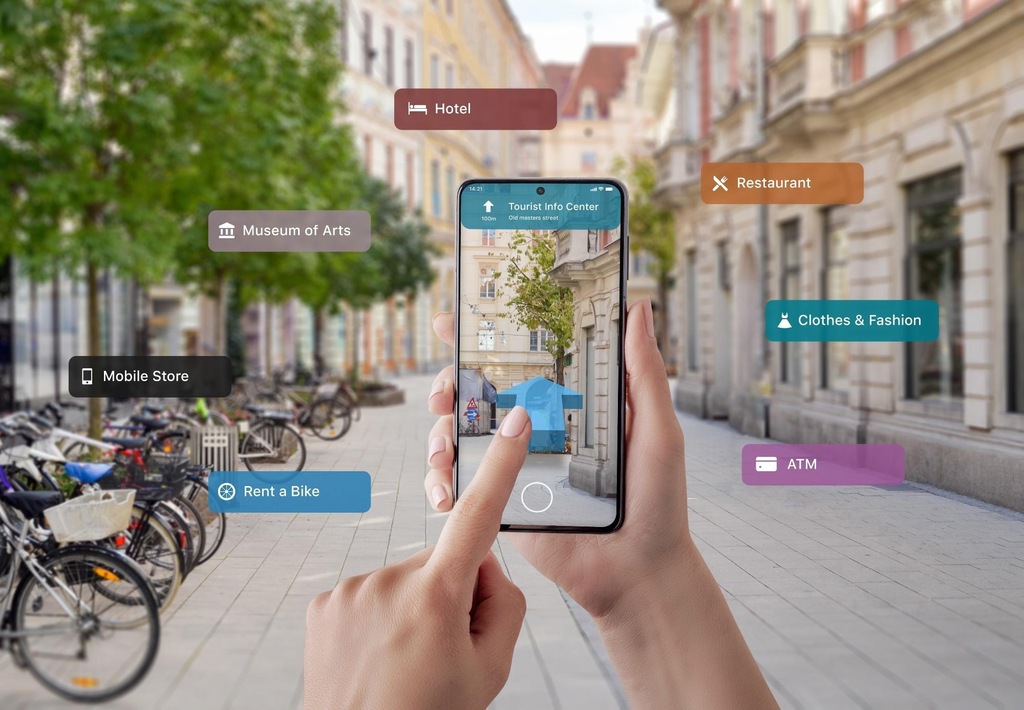
Exploring an unfamiliar destination can sometimes be challenging, especially when travelers do not understand the local language or transportation system.
Smart navigation technologies are helping travelers move around more confidently.
Modern navigation applications combine GPS, digital maps, location services, traffic information, and real-time updates.
Some applications also integrate augmented reality to display directions directly over the camera view.
Benefits of smart navigation
- Easier exploration of unfamiliar cities.
- Real-time transportation information.
- Nearby restaurant and attraction discovery.
- Walking and cycling route suggestions.
- Location-based recommendations.
- Improved travel accessibility.
For independent travelers, these tools reduce the difficulty of exploring new destinations without requiring a traditional guide for every activity.
10. Extended Reality (XR): The Next Evolution of Immersive Tourism
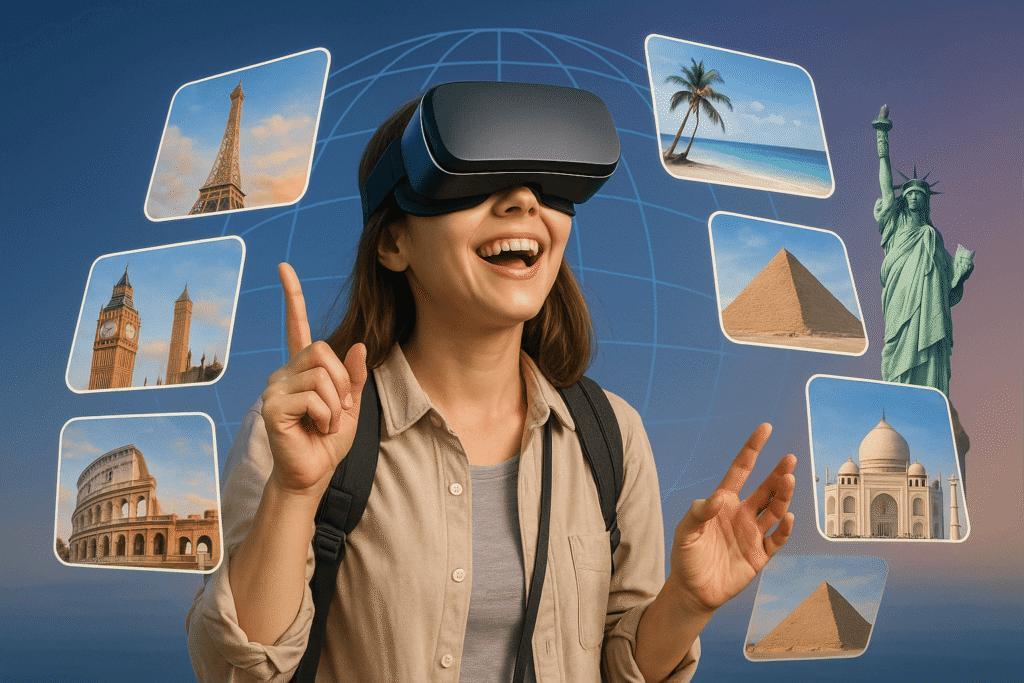
Extended Reality (XR) is a broader term that includes Virtual Reality, Augmented Reality, and Mixed Reality.
It combines digital and physical environments to create new ways for people to interact with information and experiences.
In tourism, XR could allow travelers to experience historical locations, explore cultural heritage, interact with digital guides, and participate in immersive educational activities.
For example, visitors exploring an archaeological site could use mixed-reality glasses to view digital reconstructions of ancient buildings in their original surroundings.
This technology has potential applications in museums, heritage tourism, adventure travel, education, and destination marketing.
Although XR adoption still faces cost, hardware, and content-development challenges, it represents an exciting direction for future tourism experiences.
How Travel Technology Benefits Travelers and Tourism Businesses
The development of digital technology creates opportunities for both travelers and businesses operating in the tourism industry.
| For travelers | For tourism businesses |
|---|---|
| Faster airport procedures | Improved operational efficiency |
| Personalized travel experiences | Better customer engagement |
| Easier destination exploration | More effective destination marketing |
| Convenient digital payments | Reduced repetitive tasks |
| Interactive sightseeing | New revenue opportunities |
| Better travel information | Improved customer insights |
Benefits for the tourism industry
1. Improved customer experience
Technology helps businesses provide convenient and personalized services throughout the travel journey.
2. Better operational efficiency
Automation and smart systems can reduce repetitive administrative work and improve resource management.
3. More effective marketing
AR and VR allow tourism businesses to showcase their destinations and services through engaging digital experiences.
4. Greater accessibility
Digital guides, translation tools, and virtual experiences can help more people participate in tourism activities.
5. Increased customer confidence
Virtual hotel tours, digital reviews, and interactive destination previews help travelers make more informed decisions.
Challenges of Adopting New Travel Technologies
Despite the advantages, technology adoption in tourism also creates challenges that businesses and governments must address.
1. Data privacy and security
Biometric systems collect highly sensitive personal information. Unauthorized access, data breaches, and inappropriate sharing can create serious privacy risks.
2. High implementation costs
Developing AR applications, VR experiences, smart hotel infrastructure, and biometric systems requires investment in hardware, software, maintenance, and skilled professionals.
3. Digital accessibility
Not every traveler owns a modern smartphone or has reliable internet access. Tourism services must continue supporting people who prefer traditional methods.
4. Technology dependency
Technical failures, internet disruptions, application errors, or system outages can affect the travel experience.
5. Lack of global standardization
Airports, airlines, and governments may use different digital identity systems and verification standards. Making these systems work together internationally remains an important challenge.
6. Passenger trust and consent
Travelers should understand what personal information is collected, why it is needed, how long it is retained, and who can access it.
The IATA 2026 survey found that 59% of passengers identified data breaches as a concern associated with biometric technology. This highlights why privacy and security must remain central to digital travel development. IATA
The Future of Tech in Travel: What Can We Expect by 2030?
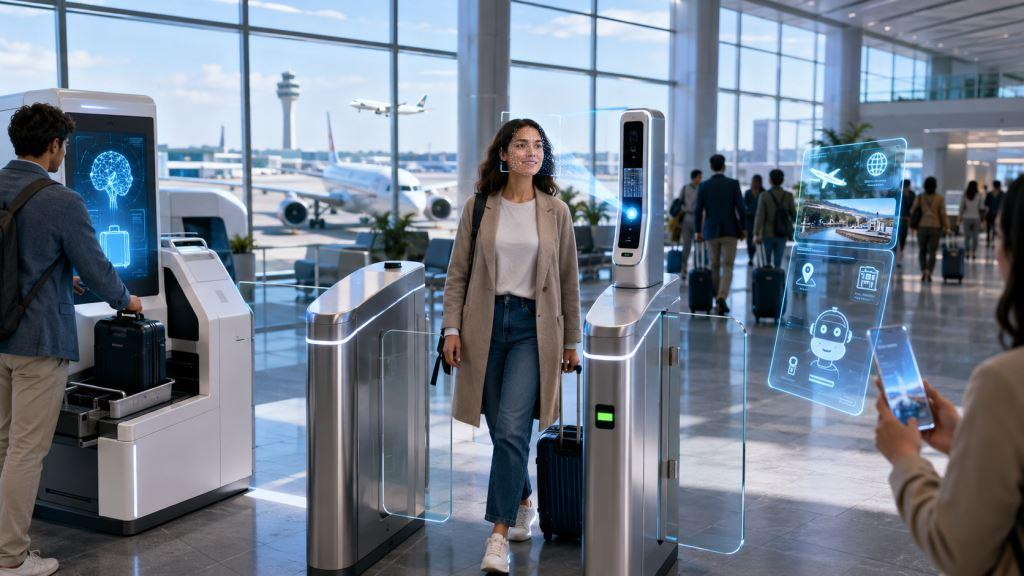
The future of tourism will likely involve greater integration between artificial intelligence, immersive technology, digital identity, and connected infrastructure.
Here are some developments that could shape the next generation of travel.
1. More seamless airport journeys
Digital travel credentials and biometric identification could reduce repeated document checks at supported airports.
AI-powered assistants may become more capable of managing itinerary changes, recommending activities, and responding to travelers’ needs in real time.
3. AR-powered destination exploration
Travelers could use lightweight smart glasses to access navigation, translations, historical information, and local recommendations while exploring destinations.
4. More immersive hotel booking
VR and interactive 3D experiences could help customers understand accommodation options before making reservations.
5. Personalized smart tourism
Connected devices and intelligent systems could help tourism businesses provide services based on individual preferences and real-time requirements.
6. Digital identity integration
Digital travel credentials could make it easier to verify identity and travel eligibility across participating airlines, airports, and governments.
These developments are possibilities rather than guaranteed timelines. Their adoption will depend on investment, regulations, infrastructure, interoperability, and public trust.
How Can Travel Businesses Prepare for the Technology Revolution?
Travel businesses do not necessarily need to invest in expensive technologies immediately. They can begin with practical improvements that deliver measurable benefits.
| Business type | Recommended technology |
|---|---|
| Travel agencies | AI itinerary planning and CRM |
| Hotels and resorts | Mobile check-in and smart room systems |
| Airlines | Digital identity and automated services |
| Tour operators | AR destination guides |
| Tourism boards | VR destination marketing |
| Restaurants | Digital menus and contactless payments |
| Tourist attractions | Interactive AR experiences |
The best approach is to identify customer problems first and then choose technologies that solve them.
For smaller tourism businesses, mobile-friendly websites, online booking systems, digital payments, and automated customer support can be excellent starting points.
Frequently Asked Questions (FAQs)
1. What is tech in travel?
Tech in travel refers to the use of digital technologies to improve travel planning, transportation, accommodation, destination exploration, and customer experiences. Examples include artificial intelligence, augmented reality, virtual reality, biometrics, and smart navigation.
2. How is augmented reality used in tourism?
Augmented reality allows tourists to view digital information over real-world environments. It can provide interactive sightseeing experiences, historical information, navigation, translations, and virtual reconstructions of cultural landmarks.
3. What is the difference between AR and VR in travel?
AR adds digital information to the real world, while VR creates a completely immersive digital environment. AR is useful for exploring actual destinations, whereas VR allows travelers to experience simulated destinations before visiting.
4. How does biometric technology improve airport security?
Biometric technology helps airports verify passenger identities using facial recognition, fingerprints, or other unique characteristics. It can reduce repeated document checks and support more efficient identity verification at participating checkpoints.
5. Is biometric technology safe for international travelers?
Biometric technology can provide secure identity verification, but its safety depends on proper data protection, encryption, access controls, informed consent, and compliance with privacy regulations. No digital system is completely free from security risks.
6. Will virtual reality replace traditional tourism?
No. VR can provide immersive previews and alternative experiences, but it cannot fully reproduce the physical, cultural, emotional, and social aspects of visiting destinations in person.
7. What is the future of travel technology?
The future of travel technology will likely include more advanced AI assistants, digital passports, biometric airport systems, AR-powered navigation, smart accommodation, and immersive tourism experiences.
8. How can small travel agencies benefit from technology?
Small travel agencies can start with online booking platforms, AI-powered itinerary planning, customer relationship management tools, digital marketing, automated communication, and virtual destination presentations.
Conclusion: Technology Is Creating a New Era of Travel
The tourism industry is entering an exciting period of digital transformation. Augmented Reality is making sightseeing more interactive, Virtual Reality is helping people explore destinations before booking, and biometric technology is making airport identity verification more convenient.
At the same time, Artificial Intelligence, smart hotels, digital wallets, connected devices, and robotics are changing how tourism businesses operate and serve their customers.
However, the success of these technologies will not depend on innovation alone. Privacy, accessibility, affordability, security, and customer trust will play equally important roles.
For travelers, these developments mean more opportunities to enjoy convenient and personalized journeys. For tourism businesses, they create opportunities to improve services, attract customers, and remain competitive in an increasingly digital marketplace.
The future of travel is not simply about reaching a destination. It is about making every stage of the journey smarter, easier, safer, and more memorable.
What do you feel about this post?

Like

Love

Happy

Haha

Sad