

Traditional Marketing: Why the Old-School Approach Still Wins Big
In a world obsessed with digital—algorithms, pixels, clicks, and conversions—it’s easy to forget that traditional marketing is still alive, kicking, and delivering massive impact. As someone who has been watching marketing trends evolve for years, I can confidently say this: traditional marketing is not dead; it has simply reinvented its role.
Let’s dive deep into what traditional marketing really is, why it still matters, and how brands—big or small—can leverage it effectively today.
What Is Traditional Marketing?
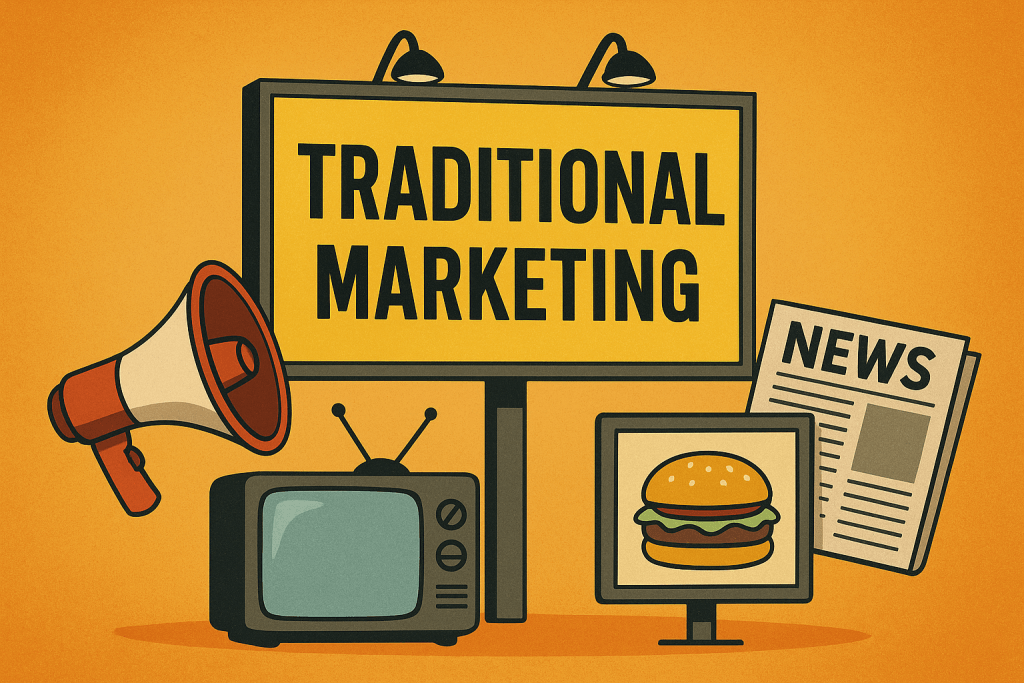
It refers to promotional strategies that existed long before the internet era. These include:
- Television commercials
- Radio ads
- Newspaper and magazine ads
- Billboards and hoarding boards
- Flyers, brochures, and posters
- Direct mail
- Telemarketing
- Physical events, sponsorships, and product placements
Think of it as the kind of marketing your parents grew up with. It focuses on mass reach, brand recall, and emotional connection—things digital marketing sometimes struggles to replicate.
Why Traditional Marketing Still Works (And Works Well!)
1. Mass Reach and Visibility
Traditional marketing hits people at scale.
A single billboard in a busy city center can reach tens of thousands daily.
A TV ad during a popular show? Millions.
Digital platforms segment audiences. Traditional platforms dominate attention.
2. Strong Emotional Impact
There’s something powerful about seeing a full-page print ad or watching a beautifully crafted TV commercial.
Traditional marketing offers tactile, visual, and emotional experiences—something digital ads often lack.
3. High Trust Value
Consumers generally trust traditional advertising more than digital ads.
Why?
Because traditional ads feel official, polished, and brand-backed—not something churned out by bots or scammy websites.
4. Less Competition
Digital platforms are overcrowded.
Every second, millions of ads compete for the same eyeballs.
But a billboard?
There are only a few at a given location, giving you exclusive visibility.
Real-World Examples of Traditional Marketing Done Right
- Coca-Cola’s billboards: Their red-themed “Share a Coke” campaign dominated physical billboards worldwide.
- Apple’s minimalist posters: Simple, bold, and unforgettable visuals across metro stations and airports.
- McDonald’s TV commercials: They build emotional storytelling that sticks with viewers for years.
These brands don’t rely solely on digital.
They combine both worlds—because they understand the psychology of presence.
The Pros of Traditional Marketing
1. High Reach
Great for brand exposure and reaching audiences who are not active online.
2. Better for Local Branding
Posters, flyers, and local newspapers help brands stay relevant in a specific region.
3. More Memorable
Physical ads tend to stick longer in memory than scrolling digital feeds.
4. Builds Trust
Traditional mediums are seen as more credible.
The Cons of Traditional Marketing
1. Expensive
TV commercials and billboards cost significantly more than online ads.
2. Hard to Measure
You can’t track exact impressions or engagement like digital marketing.
3. Less Targeted
Reaching the right audience is harder compared to digital precision targeting.
4. Slower Execution
Creating and publishing traditional ads takes time.
Is Traditional Marketing Still Relevant in 2025?
Absolutely—more than people think.
Even in a digital-dominated world, traditional marketing offers something unique:
- Physical presence
- Emotional depth
- Higher credibility
- Brand reinforcement
The smartest brands today use hybrid marketing—a balanced mix of traditional and digital—to maximize impact.
A social media campaign supported by billboards?
A TV ad boosted by hashtags and influencer marketing?
That’s the formula winning today.
How You Can Leverage Traditional Marketing Today
Here’s what works best right now:
1. Combine Online + Offline
Use QR codes on print ads.
Drive traffic from billboards to websites.
Promote TV ads on social media.
2. Focus on High-Impact Mediums
- Billboards in high-traffic areas
- Local FM radio ads
- Print ads in niche magazines
- Event sponsorships
3. Use Storytelling
Traditional marketing works best when it’s emotional and narrative-driven.
4. Keep It Visually Strong
Bold colors, simple messages, and clean design = higher recall.
Final Thoughts: Traditional Marketing Isn’t Old—It’s Timeless
The world changes fast, but human psychology doesn’t.
People still respond to visuals, emotions, physical experiences, and trustworthy communication.
Traditional marketing continues to influence decisions, build brand loyalty, and create unforgettable impressions.
And when combined with digital strategies? It becomes unstoppable.
So if you’re planning your marketing strategy, don’t ignore the roots.
Old-school isn’t outdated—it’s the foundation of brand power.