

Winning in a Competitive Business World: Strategies for Modern Success
In today’s fast-moving digital economy, business competition is stronger than ever. New companies emerge every day, technologies evolve quickly, and customer expectations continue to rise. But competition is not something to fear — it is an opportunity to innovate, grow, and become better than ever.
At OneVDO.com, where knowledge sharing inspires progress, understanding business competition helps entrepreneurs, leaders, and professionals stay ahead of the game. Let’s explore what competition really means and how businesses can not only survive but thrive.
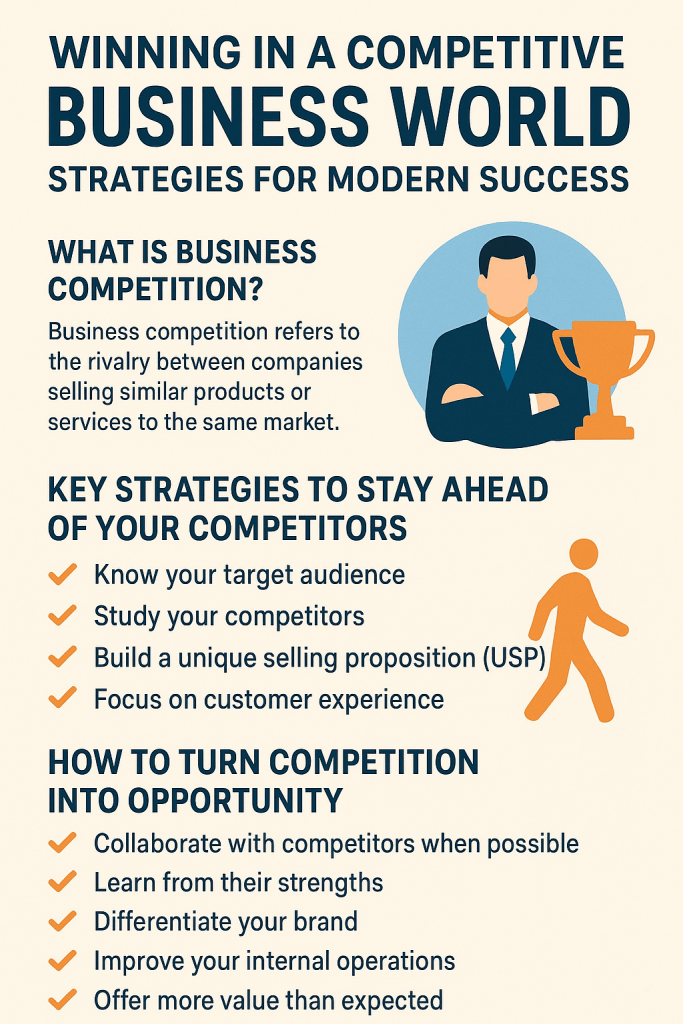
What Is Business Competition?
Business competition refers to the rivalry between companies selling similar products or services to the same market. Every business competes for:
- Customer attention
- Market share
- Brand loyalty
- Innovation
- Revenue growth
Healthy competition pushes businesses to continuously improve and deliver more value.
Why Business Competition Is Good for Growth
1. It Encourages Innovation
To stand out, companies must introduce better products, smarter services, or unique experiences. This innovation benefits both customers and the market.
2. It Improves Quality
Competing businesses constantly upgrade their features, customer support, and usability to attract and retain customers.
3. It Reduces Prices
Competition ensures fair pricing. Customers get quality products at competitive rates, increasing market trust.
4. It Builds Stronger Brands
To stay ahead, companies create stronger identities, clearer messaging, and better customer experiences.
Types of Business Competition
1. Direct Competition
Businesses offering similar services to the same target audience.
Example: Two IT companies selling web development services.
2. Indirect Competition
Companies that solve the same problem in different ways.
Example: A taxi company vs. a ride-sharing app.
3. Replacement Competition
Products that can replace another based on customer preference.
Example: Streaming platforms replacing cable TV.
Key Strategies to Stay Ahead of Your Competitors in Competitive Business
1. Know Your Target Audience
The deeper you understand your customers, the better you can serve them. Learn their pain points, goals, and behaviors.
2. Study Your Competitors
Analyze what your competitors do well — and where they fail. Use these insights to build a better offering.
3. Build a Unique Selling Proposition (USP)
Your USP is what sets you apart. It could be:
- Better customer service
- Lower price
- Faster delivery
- Better tech
- More features
4. Focus on Customer Experience
Great customer experience often wins more than low prices. Satisfied customers return again and again.
5. Embrace Technology
Use modern tools like:
- AI automation
- CRM systems
- Digital marketing
- Cloud services
- Data analytics
Technology gives businesses a powerful competitive edge.
6. Adapt Quickly
Businesses that move fast win. Be open to new trends, new tools, and new ideas.
How to Turn Competitive Business Into Opportunity
✔ Collaborate with competitors when possible
✔ Learn from their strengths
✔ Differentiate your brand
✔ Improve your internal operations
✔ Offer more value than expected
Competition is not a threat — it is a teacher. It pushes businesses to become more creative, more efficient, and more customer-focused.
Conclusion: Compete Smart, Not Hard
In today’s dynamic world, the businesses that succeed are the ones that adapt, innovate, and prioritize their customers. Competition isn’t just about being better than others — it’s about becoming the best version of your own brand.
Whether you are a startup founder, a small business owner, or a marketing professional, mastering competitive strategies helps you stay ahead in an ever-evolving marketplace.