
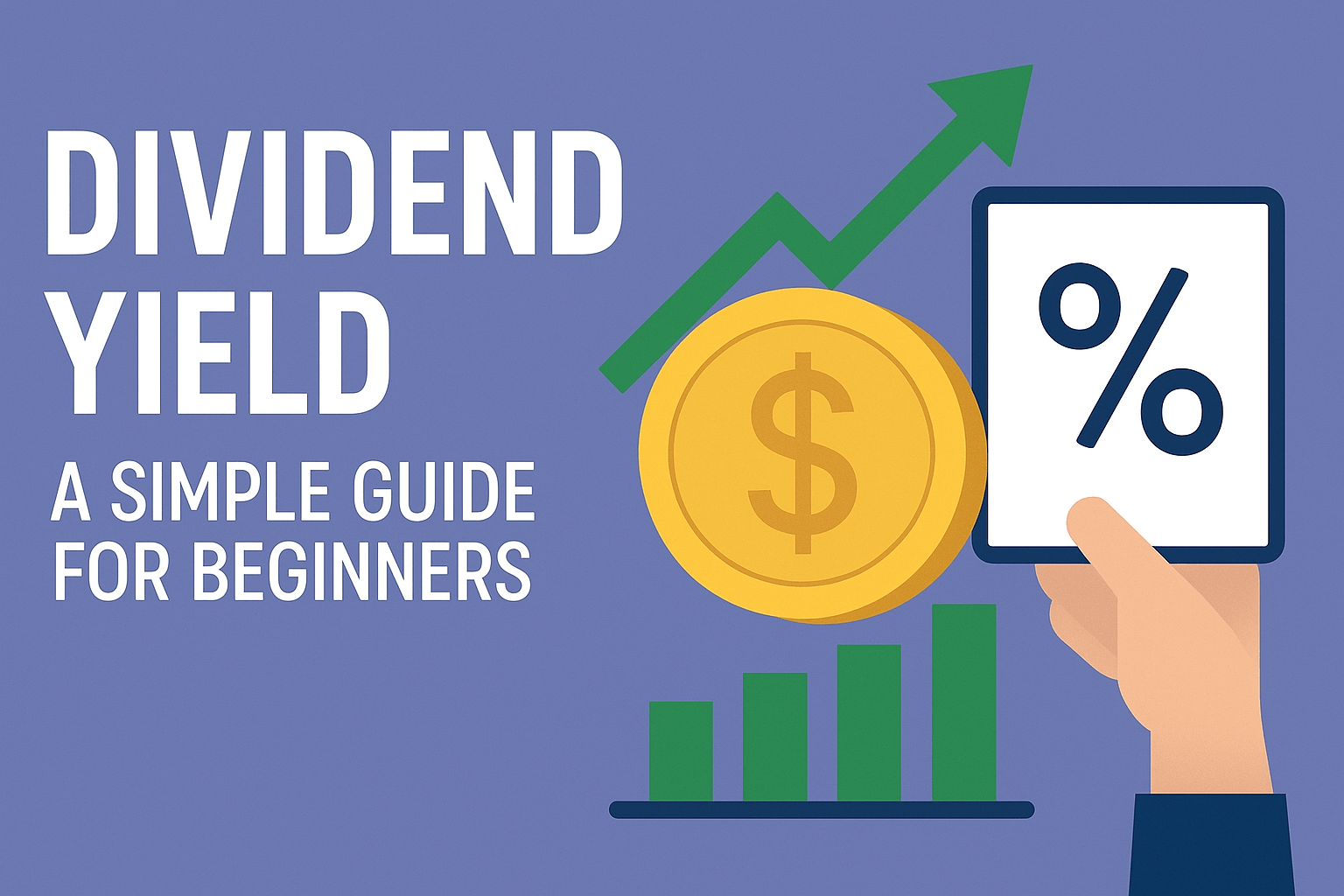
Dividend Yield: A Simple Guide for Beginners (2026 Edition)
Investing can feel overwhelming, especially when you come across terms like dividend yield, market cap, or PE ratio. Among these, dividend yield is one of the most important concepts for anyone interested in earning passive income from stocks.
In this blog, you will learn what dividend yield means, how it works, why investors care about it, and how you should use it to make smarter investment decisions.
What Is Dividend Yield?
Dividend yield is a financial ratio that shows how much a company pays in dividends each year compared to its stock price.
It tells you how much return you are getting in the form of cash dividends for every dollar you invest in a stock.
Dividend Yield Formula:
Dividend Yield= Annual Dividend per Share/Current Share Price ×100
Example:
If a company pays $2 per share in yearly dividends and its share price is $50, then:
Dividend Yield=2/50×100=4%
This means the company returns 4% of its stock value to shareholders every year as cash dividends.
Why Dividend Yield Matters
It is important because it helps investors understand:
1. Passive Income Potential
Higher yields often mean better regular income from your investment.
2. Company Stability
Companies that consistently pay dividends are usually financially strong and stable.
3. Total Investment Return
Your returns come from:
- Dividend income
- Stock price appreciation
A good dividend yield boosts your overall returns.
4. Comparison Tool
It helps compare:
- Two companies
- Two sectors
- Two investment choices
…based purely on income returns.
Types of Dividend Yield Investors Should Know
1. Forward Dividend-Yield
Uses expected future dividends based on company guidance.
2. Trailing Dividend-Yield
Uses dividends paid in the past 12 months.
3. High Dividend-Yield
Refers to yields above the industry average (usually 4–8%).
4. Low Dividend-Yield
Lower than peers; may indicate:
- A fast-growing company reinvesting profits
- A company struggling to increase payouts
What Is Considered a Good Dividend Yield?
There is no universal number, but generally:
- 2% – 4%: Safe and sustainable
- 4% – 6%: Good yield with moderate risk
- 6% – 10%: High yield; check financial stability
- 10%+: Warning sign—may indicate financial problems
Pros of High Dividend-Yield
- Regular passive income
- Ideal for long-term investors
- Usually backed by mature companies
- Helps offset inflation
- Can reduce portfolio volatility
Cons of High Dividend-Yield
- Not always sustainable
- High yield may mean stock price is falling
- Lower reinvestment into growth
- Dividend cuts can hurt stock value
Dividend-Yield vs Dividend Payout Ratio
| Feature | Dividend-Yield | Dividend Payout Ratio |
|---|---|---|
| Measures | Return on investment | % of profit paid as dividends |
| Formula | Dividend ÷ Price | Dividend ÷ Earnings |
| Focus | Income return | Company’s payout behavior |
Both metrics together show whether a company’s dividends are affordable and sustainable.
How to Use Dividend-Yield Wisely
Here are smart ways to use it while investing:
1. Look for Consistency, Not Just High Numbers
A stable 3–5% yield is better than a risky 12% yield.
2. Check Dividend History
Reliable companies increase dividends gradually over time.
3. Evaluate the Payout Ratio
A safe payout ratio is usually 40%–60%.
4. Consider Total Returns
A fast-growing company with low yield might still give higher overall returns.
5. Compare Within the Same Sector
Each industry has different dividend standards.
Example:
- Utilities = high yield
- Tech = low or no yield

Common Mistakes to Avoid
✔ Chasing very high dividend yields
✔ Ignoring falling stock prices
✔ Not checking debt levels
✔ Not reviewing dividend sustainability
✔ Comparing companies from different industries
Conclusion: Dividend Yield Helps You Make Smarter Investment Decisions
It is a simple yet powerful financial indicator. It helps investors understand how much income they can expect from a stock compared to its price.
But remember:
A high dividend yield alone does not guarantee a good investment.
Always analyze a company’s stability, earnings, and long-term growth potential before making decisions.
By learning how to use dividend-yield effectively, you can build a stronger, safer, and more profitable investment portfolio.