

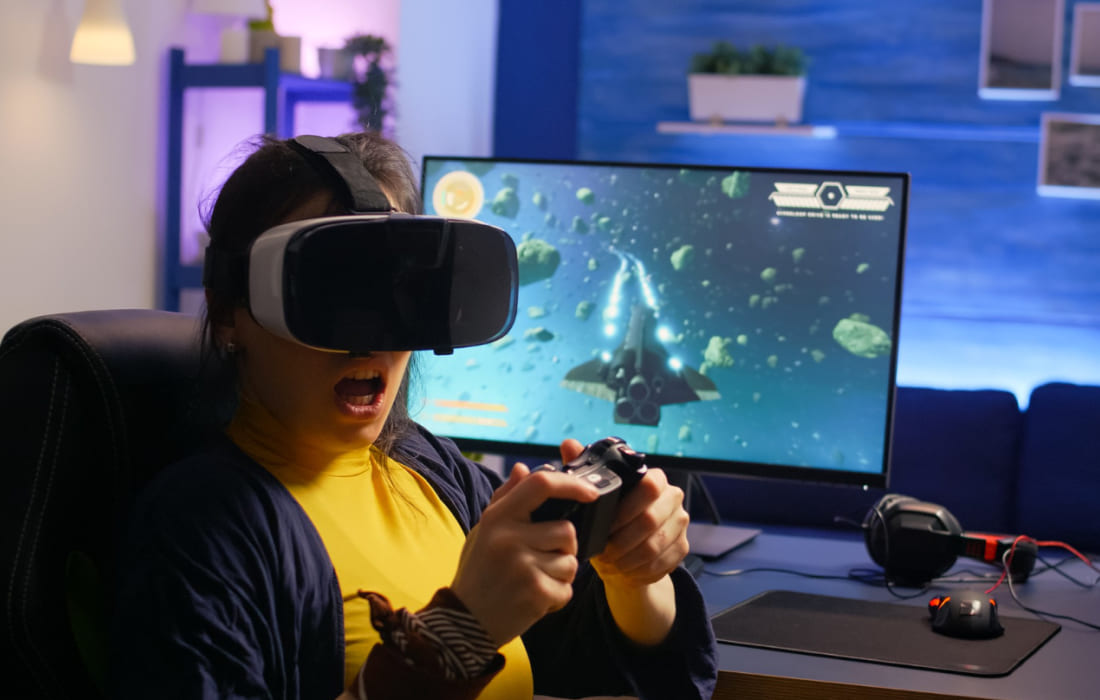
VR and AR Beyond Gaming: Real-World Applications
While VR started in gaming, the tech—the high-refresh-rate headsets, haptic controllers, and powerful game engines (like Unreal and Unity)—is now a multi-billion dollar tool for “serious” industries.
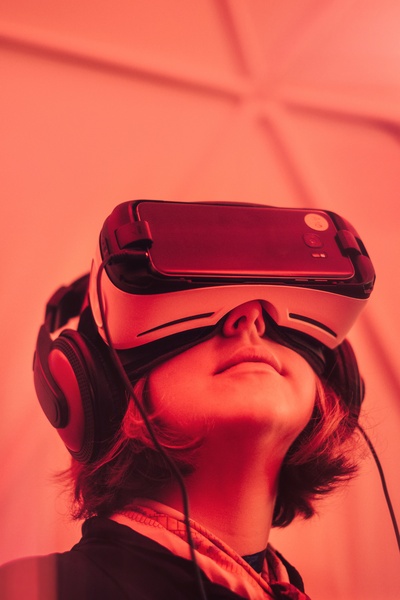
As of 2026, here is how “gaming” tech is solving real-world problems:
1. Healthcare & Modern Medicine
The most profound shift is in the operating room. Surgeons use VR headsets to practice rare or high-stakes procedures on digital twins of actual patients before making an incision.
- Pain Management: In pediatric wards, “medical gaming” (like virtual scavenger hunts) is used to distract children during painful procedures like IV insertions or burn treatments. It effectively lowers perceived pain by “clogging” the brain’s sensory pathways with immersive visual data.
- Physical Therapy: Stroke survivors and patients with motor skill issues use VR-based games to perform repetitive rehabilitation exercises. Because it feels like a game, patients typically complete 3-4 times more repetitions than they would in a traditional clinical setting.
2. Enterprise & Skills Training
Companies like Walmart and Ford have pioneered “V-Learning” (Virtual Learning).
- Speed to Competency: Studies show that employees trained in VR learn up to 4 times faster than in a classroom. A 2-hour safety lecture can be condensed into a 30-minute immersive scenario.
- Soft Skills: VR is used to simulate “difficult conversations” for managers, such as performance reviews or diversity and inclusion scenarios. The immersion creates a much stronger emotional connection and higher confidence in applying the skills in real life.
3. High-Stakes Public Safety
Law enforcement and military units use VR to simulate environments that are too dangerous or expensive to build in the real world.
- Tactical Missions: Police officers trained in VR are reportedly 2.7x more successful in tactical missions compared to traditional training, largely due to the ability to repeat high-stress “de-escalation” scenarios safely.
- Military Maintenance: Sailors and mechanics use VR to practice repairing complex engines or underwater vehicles. This removes the “wait time” for physical equipment and prevents costly damage to real-world assets during the learning phase.
4. Architecture & Engineering
Before a single brick is laid, architects use gaming engines (Unreal Engine 5) to let clients “walk through” buildings.
- Real-Time Design: Clients can change the lighting, floor materials, or layout instantly within the headset, saving millions in mid-construction change orders.
- Urban Planning: Cities use VR to simulate how a new stadium or bridge will affect traffic flow and noise levels for the surrounding neighborhood before construction begins.
5. Education & Remote Learning
VR is bridging the gap for students who cannot physically attend school or field trips.
- “Virtual Field Trips”: Students can visit the core of a volcano or the surface of Mars. In 2026, many universities are using VR to provide remote students with access to “Virtual Labs” where they can conduct chemistry experiments without the risk of actual explosions.
Summary of Benefits (2026 Data)
| Sector | Primary Metric | Outcome |
| Corporate | Training Speed | 400% faster than classroom |
| Healthcare | Procedural Accuracy | 42% improvement in surgeons |
| Safety | Mission Success | 2.7x higher for VR-trained officers |
| Rehabilitation | Patient Engagement | Significantly higher repetition rates |
While Virtual Reality (VR) is about replacing your surroundings, Augmented Reality (AR) is about enhancing them. In 2026, the tech that once powered “Pokémon GO” has matured into a vital layer of the physical world, used for everything from saving lives to selling furniture.
Here is how AR gaming technology is being applied in the real world:
1. Retail & “Gamified” Shopping
Retail is the biggest adopter of AR. Brands have moved away from static photos to interactive 3D models that you can “place” in your room.
- Virtual Try-Ons: Using the same face-tracking tech found in AR filters, jewelry brands (like Hearts on Fire) and eyewear retailers let customers try on expensive items from their own homes via a browser.
- In-Mall Activations: Malls now use WebAR (no app required) to create treasure hunts. For example, shoppers scan QR codes to find digital mascots, which then unlock real-world merchant coupons. This “gaming” loop significantly increases foot traffic and sales.
2. High-Precision Healthcare
AR is often preferred over VR in surgery because doctors need to see the actual patient, not a digital simulation.
- Surgical Navigation: Surgeons use AR headsets to overlay a patient’s MRI or CT scan directly onto their body during surgery. This gives the doctor “X-ray vision,” allowing them to see exactly where a tumor or a blood vessel is located beneath the skin before they make an incision.
- Vein Visualization: Handheld AR devices are used by nurses to highlight veins through the skin, reducing “missed” needle sticks and patient discomfort.
3. Industrial Maintenance & Manufacturing
In 2026, the “Industrial Metaverse” is a reality. AR is the primary tool for field technicians.
- Remote Assistance: A technician in a remote location can wear AR glasses (like the latest industrial-grade smart glasses) while a master engineer in another country “draws” instructions in their field of vision in real-time.
- Digital Overlays: When a worker looks at a complex piece of machinery, the AR system overlays step-by-step repair instructions and safety warnings directly onto the relevant parts. This has been shown to improve operational efficiency by up to 10%.
4. Education & Hands-On Learning
AR turns traditional textbooks into interactive labs.
- Anatomy & Science: Students can scan a page in a textbook and see a 3D beating heart appear on their desk. They can “walk around” it, zoom in on valves, and see how blood flows—making complex concepts much easier to visualize than a 2D diagram.
- Historical Site Tours: At museums or historical landmarks, AR allows visitors to hold up their phones and see what a ruin looked like 2,000 years ago, complete with digital “actors” moving through the space.
5. Urban Planning & Architecture
Cities use AR to bridge the gap between blue-prints and reality.
- On-Site Visualization: Architects can take a tablet to an empty lot and show stakeholders exactly how a proposed building will look in the context of the surrounding street.
- Public Feedback: Urban planners use AR to show residents how a new bridge or park will affect their neighborhood, allowing for immediate, visual feedback before construction begins.
VR and AR: The Strategic Difference (2026)
| Feature | AR (Augmented Reality) | VR (Virtual Reality) |
| Primary Device | Smartphones / Smart Glasses | Headsets (Oculus/Vive/Vision Pro) |
| User State | Aware of real surroundings | Fully immersed / Isolated |
| Best For | On-the-job guidance & Retail | High-stakes training & Gaming |
| 2026 Trend | “WebAR” (No app needed) | “Passthrough” (Mixed Reality) |
In 2026, the boundary between “gaming tech” and “essential tools” has almost entirely vanished. While we’ve covered the basics of how VR and AR (Augmented Reality) work, their integration into the fabric of daily life has reached a definitive tipping point this year.
Here is the current state of “Extended Reality” (VR and AR) applications beyond the gaming world.
1. The Medical Revolution: Beyond Surgery
While surgical practice is the headline, XR is now tackling the mental health crisis and patient recovery with unprecedented precision. The VR and AR beyond gamming help in Real-World Applications
- Mental Health (The “Virtual Pharmacy”): VR is now a standard clinical tool for treating PTSD and phobias through Exposure Therapy. In 2026, clinical trials show VR can reduce pain scores by up to 50%, allowing hospitals to save significant costs on traditional pain medication.
- Telementoring via AR: Expert specialists now use AR glasses to “teleport” into rural clinics. They see exactly what the local nurse sees and can draw “digital annotations” in the air to guide complex life-saving maneuvers in real-time.
2. The “Industrial Metaverse”
Industrial giants are seeing a 10% increase in operational efficiency by integrating AR with the Internet of Things (IoT).
- Digital Twins: Engineers use VR to walk through “digital twins” of entire factories. They can simulate a production line failure before it actually happens, identifying bottlenecks without stopping real-world machines.
- Logistics & “Vision Picking”: In warehouses, workers use AR glasses to see a highlighted path to the correct shelf. As they look at a package, the AR automatically scans the barcode and confirms the order—completely hands-free.
3. Environmental Science & Conservation
XR has become a powerful tool for both scientists and activists to visualize the invisible.
- Wildlife Tracking: Researchers now use AR overlays to see live GPS paths of tagged animals (like tigers or elephants) mapped directly onto the physical landscape, helping them understand habitat usage with much better spatial awareness.
- “Empathy Machines” for Climate: Conservation groups use 360° VR to transport donors to the middle of a bleaching coral reef or a melting glacier. These immersive experiences have proven far more effective at driving donations and policy changes than traditional 2D documentaries.
4. Next-Gen Real Estate & Living
The way we interact with physical space has changed.
- The 2026 Housing Market: Roughly 40% of apartment buyers are now influenced by panoramic VR tours. Prospective buyers can “live” in a virtual version of an unbuilt home for 24 hours to see how the natural light changes from sunrise to sunset.
- AR Wayfinding: Major festivals and transit hubs (like LiveNation events) now use AR-based GPS. Instead of looking at a flat blue dot on a phone, you follow a digital “trail” on the ground through your phone’s camera or smart glasses.
Comparison of Real-World Impact (2026)
| Field | Core Tech Used | Primary Benefit |
| Mental Health | VR (Immersive) | High-speed desensitization to trauma. |
| Manufacturing | AR (Overlay) | Hands-free repair & 10% efficiency gain. |
| Retail | WebAR (Browser) | 8.5M+ “virtual try-ons” (e.g., Sephora). |
| Logistics | AR Glasses | Reduced “mis-picks” in large warehouses. |
The “Smartphone Replacement” Watch
A major trend this year is the rise of no-display AR. These are smart glasses that look like normal spectacles but use AI and audio to translate languages in real-time or provide voice-guided navigation, bypassing the need for a screen entirely. By 2030, many analysts expect these to begin replacing the smartphone as our primary digital interface.
Quick Takeaways for the XR Frontier
- Solve, Don’t Just Show: Use VR to eliminate physical risks in high-stakes training and AR to eliminate mental friction by overlaying real-time data onto your workspace.
- Comfort is King (AR and VR): For professional VR and AR use, prioritize lightweight headsets with high refresh rates to prevent “sim-sickness” during extended immersive sessions.
- Start Small: Begin with a specific AR and VR pilot—like a single AR assembly guide or a VR safety drill—before trying to overhaul your entire workflow with AR tech.
- Data is the Bridge: Ensure your VR and AR tools sync with existing software (like CRM or CAD) so the insights you gain in VR and AR the annotations you make in translate back to the real world.






Leave a Reply